Skip to content

Crews available

(813) 555-0147

Fire & smoke

The fire stops at a doorway. The smoke does not.

Most of the property we restore after a fire was never on fire. It was in the next room, or upstairs, or on the other side of the house, taking smoke into everything porous for as long as the fire burned.

Scope
Structure, contents and odour
Technicians
IICRC FSRT and OCT certified
Board-up
Same night, before anything else
(813) 555-0147Call now — someone picks up

Before you go back in

Soot is acidic, and it is working right now

Smoke residue is chemically active. Within days it etches chrome, pits aluminium window frames and appliance trim, and yellows any surface with a finish on it. Fabric and carpet take a permanent set. The damage that gets argued about with insurers months later mostly happened in the first week.

So the order matters: secure and board up, get the power and gas situation resolved, pull the air through filtration, and start on the surfaces that corrode first — not the ones that look worst.

And the fire service will have put a great deal of water into the building. Almost every fire job we run is a water job as well, which is why the drying equipment arrives at the same time.
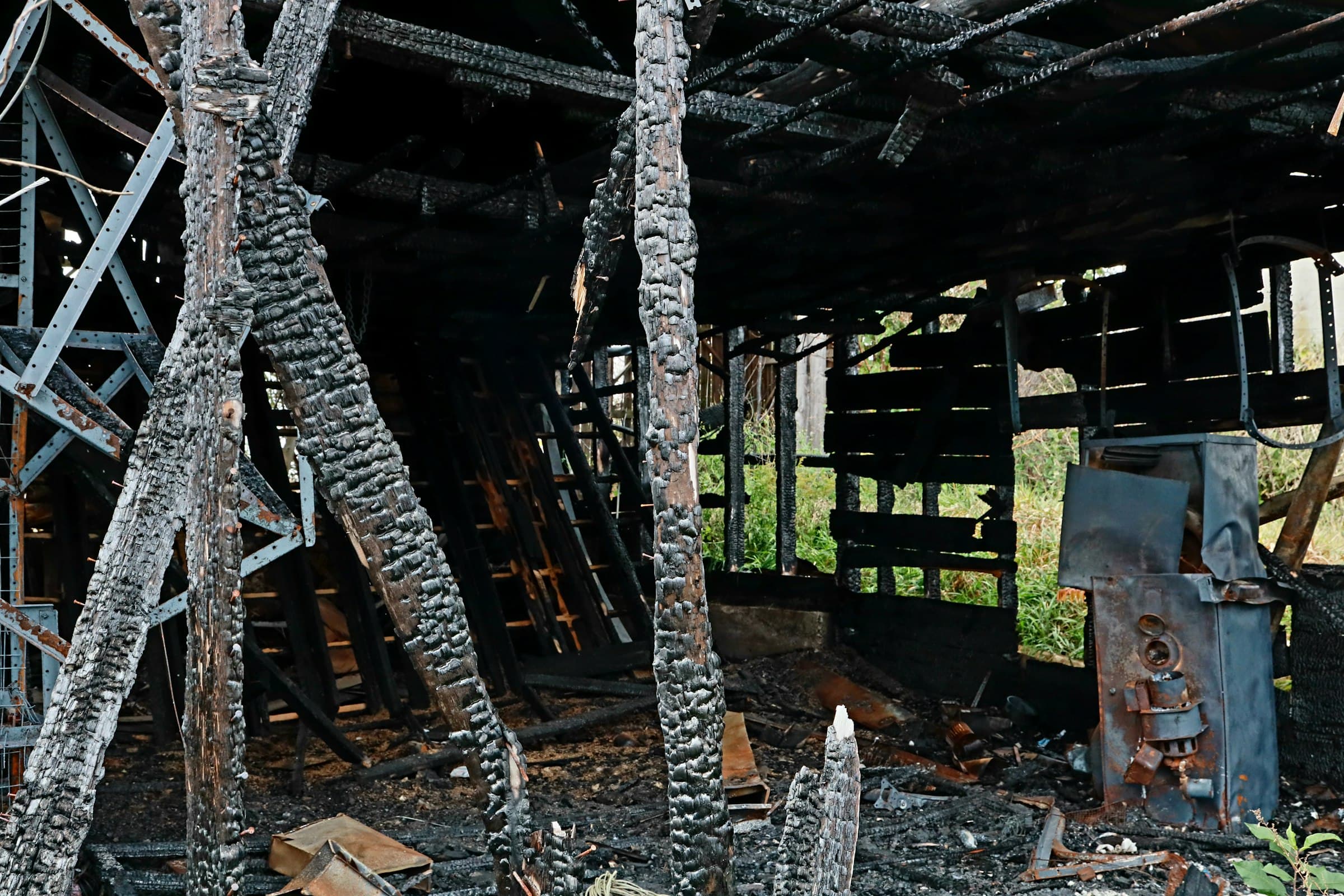
The inside of a burnt wooden structure, its beams blackened and cracked by fire.
Structural timber after fire. The char depth tells you how long the fire sat in this spot.
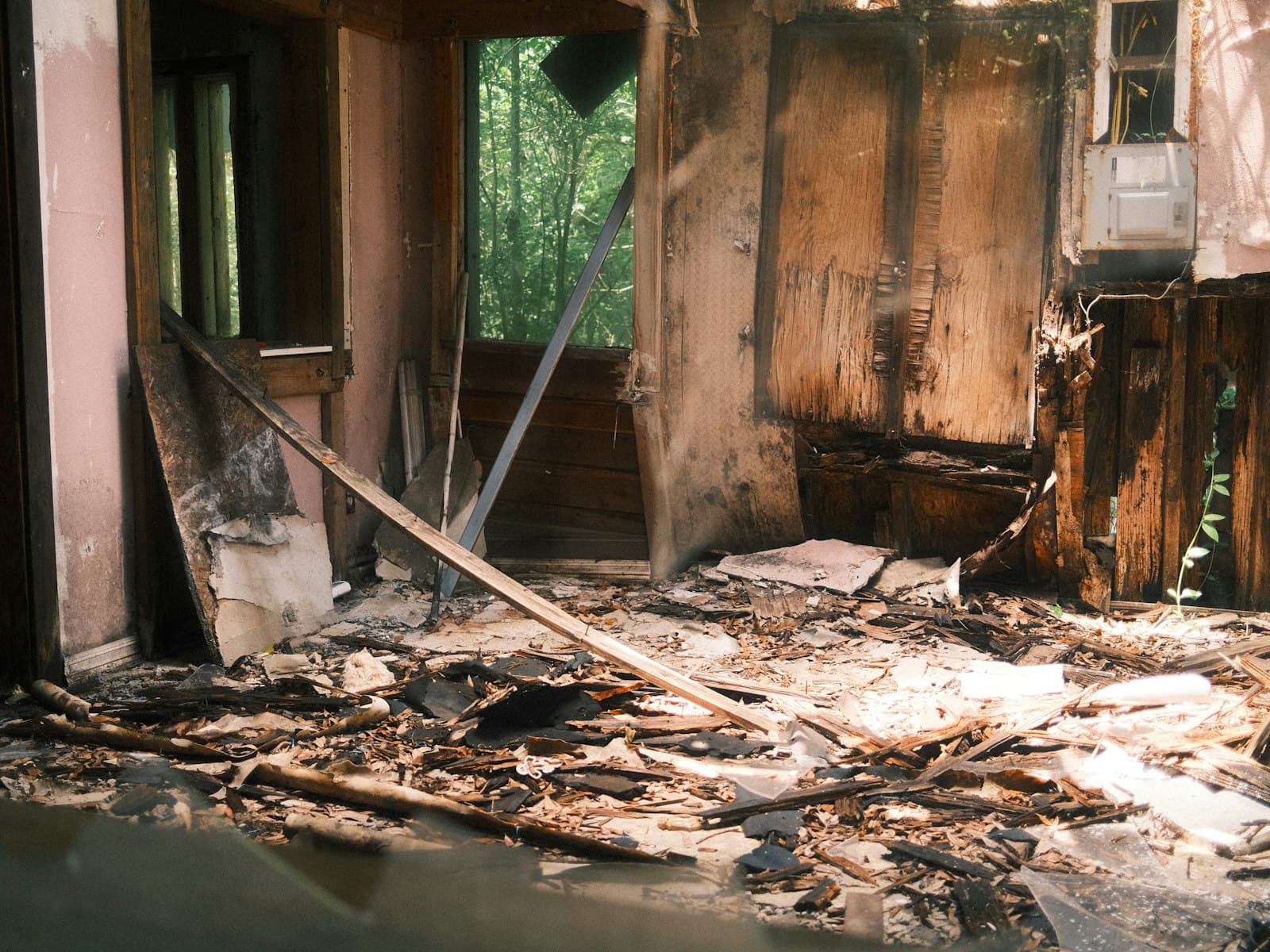
A room after a fire, walls and contents blackened and heat-damaged.
A room after the fire is out. Everything porous in here has taken smoke, including what looks untouched.

Four different problems

Not all soot is the same, and the wrong cloth makes it permanent

These look broadly alike on a wall. They come off — or refuse to come off — in completely different ways. This is the single most useful thing to know before you touch anything.

Dry smoke

0.1–0.5 μm

Fast, hot fires. Paper, wood, natural fibres.

Fine and powdery. Sits on the surface rather than bonding to it, but gets into every crack, screw hole and switch plate.

If you wipe it: A dry cloth mostly lifts it. A damp one turns it to a grey slurry and pushes it into the pores.

Wet smoke

Larger, oily

Slow, smouldering, low-heat fires. Plastics and rubber.

Thick, sticky and pungent. It bonds to whatever it lands on and it webs across corners and ceilings.

If you wipe it: It smears. Every pass drives it further into the substrate and spreads the stain wider than it started.

where a picture hung

Protein residue

Near-invisible film

Kitchen fires. Meat and fat evaporated at low heat.

You cannot see it, so it gets missed. It discolours paint and varnish over weeks and the odour is severe and persistent.

If you wipe it: Cleaning around it is the usual mistake. It stays, it keeps yellowing, and the smell comes back every warm day.

Fuel oil soot

Dense, oily clusters

Furnace puff-back.

Goes everywhere the ductwork goes, so it reaches rooms with no other sign of a fire.

If you wipe it: Bonds hard. Household cleaners set it. This one usually needs the HVAC system cleaned before anything else is worth doing.

The thing nobody tells you

Why the first clean is the one that decides everything

Soot particles are between roughly a tenth of a micron and a few microns across. The pores in painted drywall, grout, timber and upholstery are larger than that. A wet cloth does not lift the particle off the surface — it carries it in.

Once it is in the substrate, no amount of surface cleaning reaches it. The wall has to be sealed and refinished, or the material replaced. A great deal of what gets written off after a fire was made unsalvageable by a well-meant weekend with a sponge.

If you take one thing from this page: photograph everything, then leave it. We would rather arrive to an untouched room than a clean one.

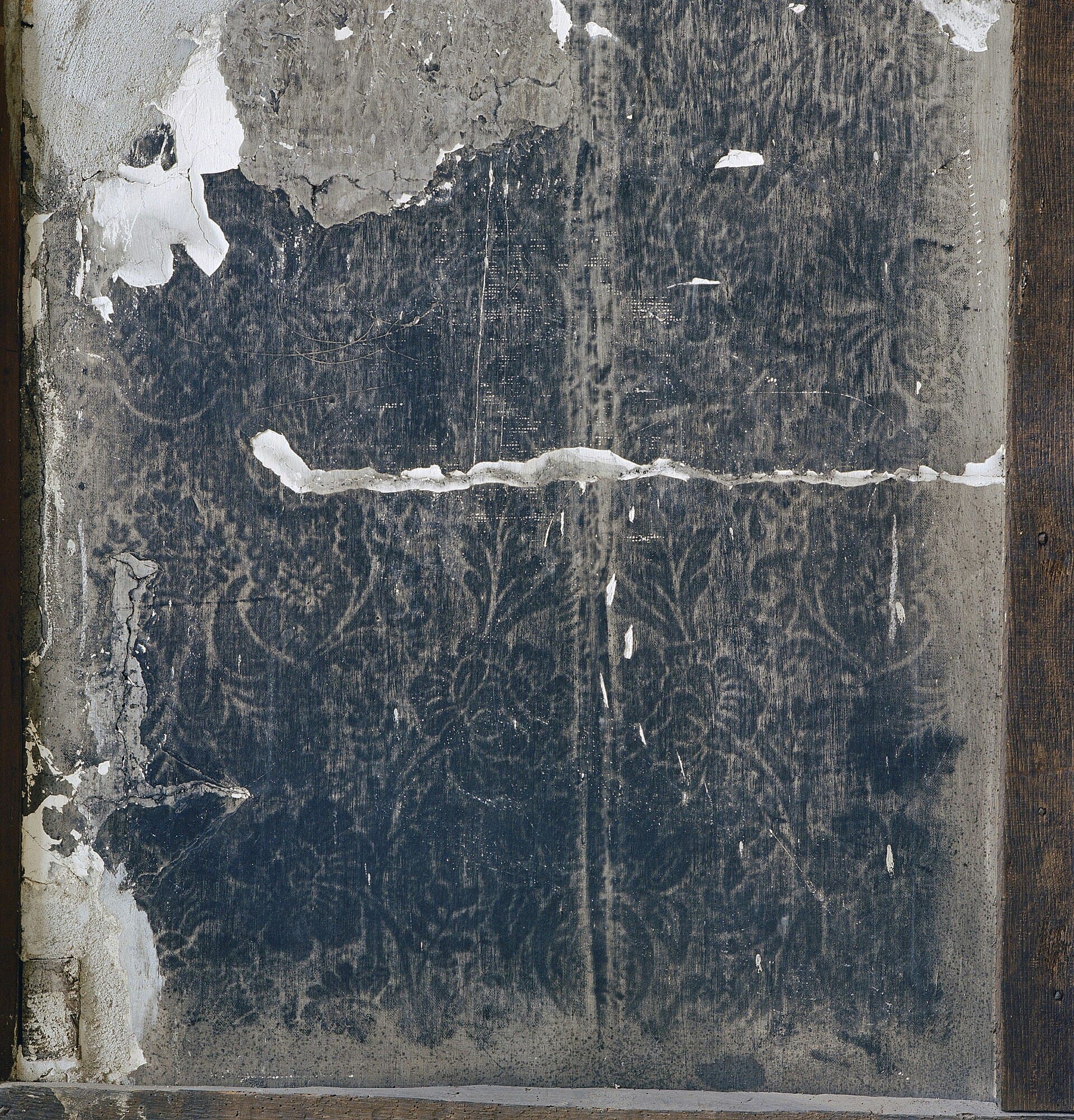
A plaster wall darkened by soot, carrying the damask pattern of the wallpaper that used to cover it, with fragments of paint still clinging at the edges.
Soot passed through the wallpaper and printed its pattern onto the plaster underneath. This is what smoke does to a surface it was never supposed to reach.

Your things

What happens to everything in the house

Inventoried before anything moves

Room by room, photographed and listed, with a condition noted against each item. That list is what your contents claim is settled from, so it is done properly rather than quickly.

Cleaned off site, mostly

Textiles, soft furnishings and most hard contents leave the building — there is nowhere clean to work inside a smoke-damaged house. They come back when the structure is finished, not before.

Some things do not come back

Anything porous that has taken heavy wet smoke, and most food, cosmetics and medication. We will tell you which category something is in rather than letting you hope.

Irreplaceable things get flagged first

Photographs, documents, instruments, anything with a name attached. Tell us on the phone and it moves to the front of the queue, because those are the items where hours matter.

Odour, and why it comes back

A smell that returns on a warm day means the source is still in the building. Odour molecules sit in porous material and release faster as temperature and humidity rise — which in Florida is most of the year. Masking agents and ozone treatments on their own do not fix it.

Removing it means removing or sealing the source: cleaning what can be cleaned, taking out what cannot, sealing the framing and substrates that held the smoke, and cleaning the duct system, which otherwise redistributes the smell through the whole house every time the air handler runs.

Only then is thermal fogging or hydroxyl treatment worth doing, and only as the last step. Anyone offering it as the first step is selling you a few weeks of quiet.

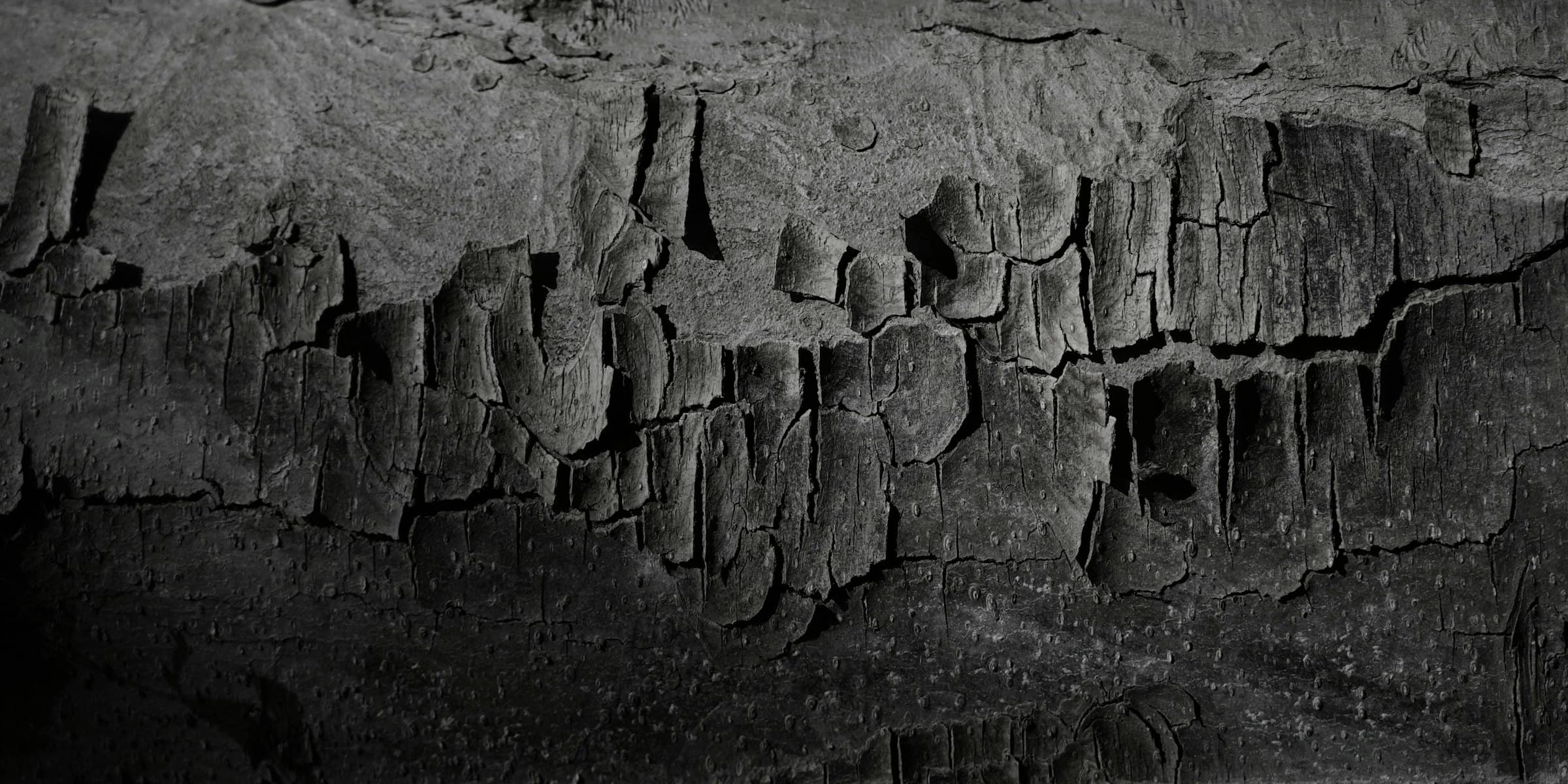
Rough charred wood in close-up, showing deep cracking across the grain.
Alligatoring across the grain — the pattern char makes when wood burns hot and fast.

A fire claim is usually the largest one a household will ever make. Here is what the process involves.