Skip to content

Crews available

(813) 555-0147

Water damage

Most of what we do, and most of it has nothing to do with weather.

Air-conditioning condensate, a failed supply line, cast iron under a slab, a water heater in a garage. Storms are the ones that make the news; these are the ones that happen every week.

Response
On site inside the hour, core metro
Water categories
1, 2 and 3 to IICRC S500
Documentation
Daily readings to your adjuster
(813) 555-0147Call now — someone picks up

The first thing we determine

What kind of water it is

This single decision drives everything else — what can be dried, what has to come out, and what your insurer will be asked to pay for. It is not about how dirty the water looks.

Category 1

Clean water, at the moment it arrives

A supply line, a tub overflow, a water heater, melting ice. It came from somewhere sanitary and it does not pose a health risk on contact.

This does not stay Category 1. Left undried, bacterial growth moves it toward Category 2 — commonly within 48 to 72 hours, though it depends on temperature and on what it is sitting in rather than on a clock.
Category 2

Contaminated enough to make you ill

Washing machine or dishwasher discharge, toilet overflow with urine but no solids, water that has passed through building materials and picked up what was in them.

Porous materials that have absorbed Category 2 water usually come out. Semi-porous and hard surfaces can often be cleaned and dried.

Category 3

Grossly contaminated

Sewage, ground surface water, river flooding, and storm surge. The IICRC treats wind-driven rain from a hurricane as Category 3 in most cases.

This is the category most Tampa Bay storm losses fall into, and it is why the scope feels aggressive. Porous material is removed, not dried. Carpet, pad, insulation and the lower drywall go. So does anything the water reached that cannot be cleaned to a sanitary condition.

Why we come tonight

What happens to a house that stays wet

  1. First few hours

    Water spreads. It wicks up drywall, runs along the top of the slab under the flooring, and goes into wall cavities through the gap at the base plate. The wet area is already much larger than the wet-looking area.

  2. 24 hours

    Drywall paper and particleboard begin to swell and lose strength. Laminate flooring lifts at the joints. Odour starts. In Florida's humidity, mould has begun on any surface that stayed wet — the EPA window for drying material before remediation is needed is 24 to 48 hours.

  3. 48 hours

    Mould growth becomes visible on paper-faced surfaces. Category 1 water has degraded. Solid hardwood cups and may not come back. Doors and casings swell and stop closing.

  4. 72 hours and beyond

    Remediation rather than drying. Materials that could have been saved on day one are now being removed. The claim gets larger, and so does the disruption. This is the entire reason we answer the phone at 3am.

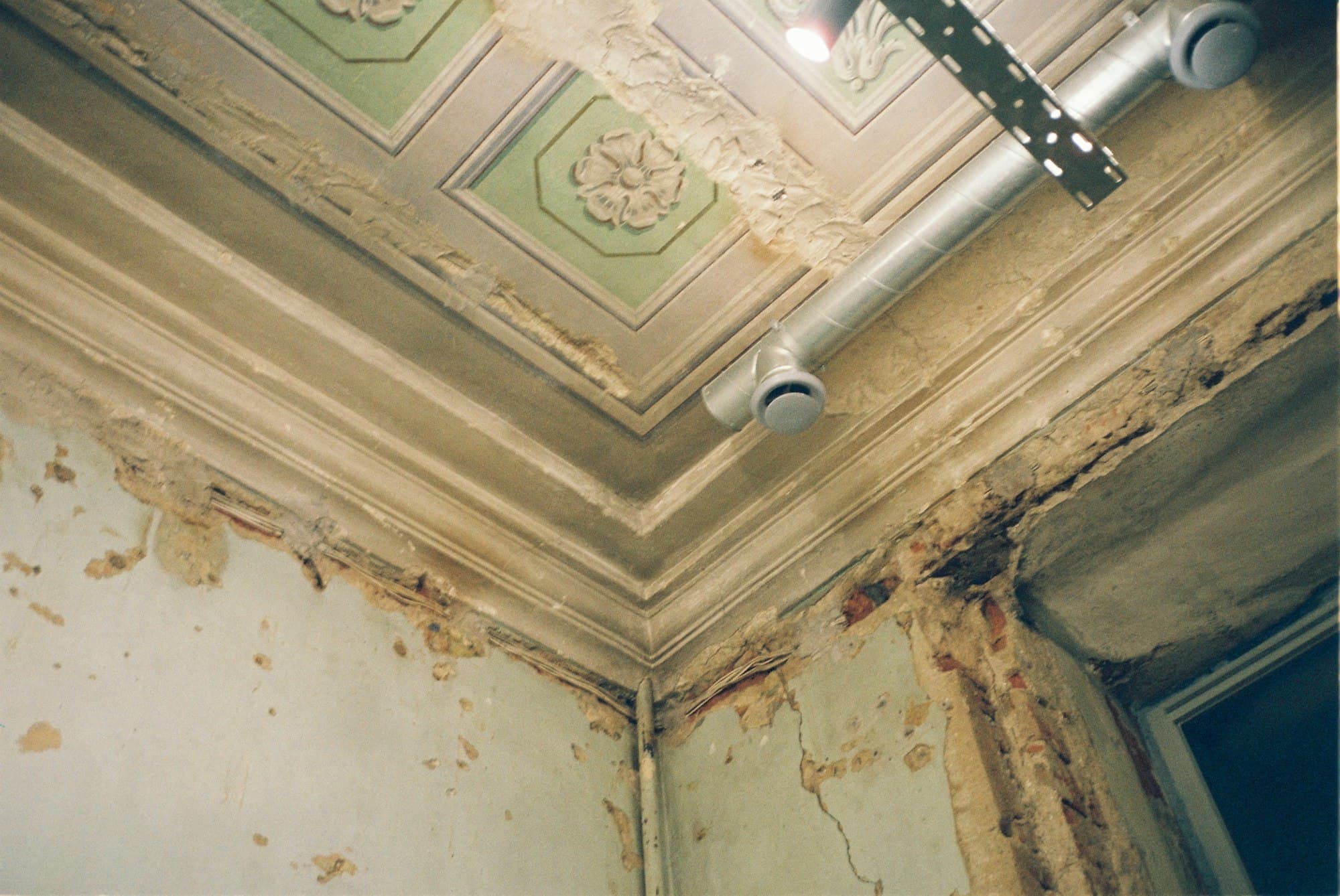
A ceiling with paint blistered and peeling away in sheets from sustained moisture.
Paint releasing from a ceiling. Blistering on this scale means the substrate has been wet for weeks, not hours.
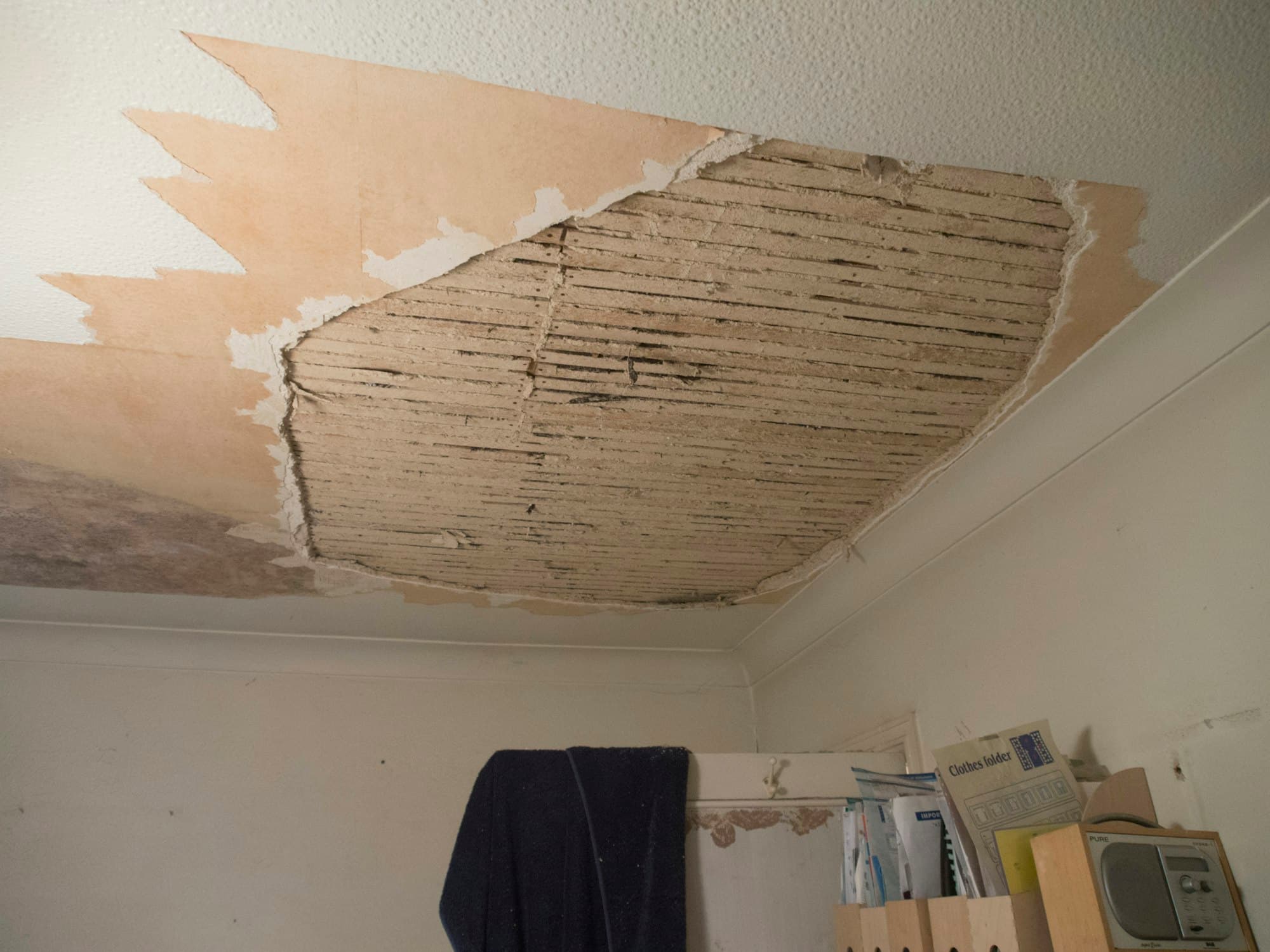
A room with the ceiling torn out, exposing joists and the underside of the floor above.
Ceiling removed to reach the cavity. What is wet is almost never only what is stained.

Moisture map · wall elevation

The stain is two feet. The wet area is nine.

Water spreads through gypsum and along the base of a block wall far past anything you can see. This is why we meter a room instead of looking at it, and why the drying scope is always larger than the mark on the paint.

what you can see18%31%44%62%43%29%17%9 ft

Readings shown are illustrative of a drywall-over-block wall after a supply-line failure. Yours get measured, dated and photographed, room by room, every day the equipment is running.

Extraction and drying

How your house actually gets dry

Removing the standing water is the fast part and it is not the job. The job is the water inside the materials, which comes out slowly and only under controlled conditions.

Drying chamber · plan view

What the equipment is doing in your house

Air movers are angled along the surfaces rather than pointed at them, which strips the still air off the material so it can release moisture. The dehumidifier then takes that moisture out of the room. The room is sealed because drying an open house means drying Florida.

AM-1AM-2AM-3AM-4LGR-1to draincontainmentat doorwayflood cut — drywall removed to 24"
AM 1–4
Air movers. Counted and logged daily — the number is part of what your insurer is billed for.
LGR-1
Low-grain refrigerant dehumidifier, draining continuously rather than filling a bucket someone has to empty.
Flood cut
Drywall opened above the water line so the cavity and the base of the wall can dry. Not damage — access.
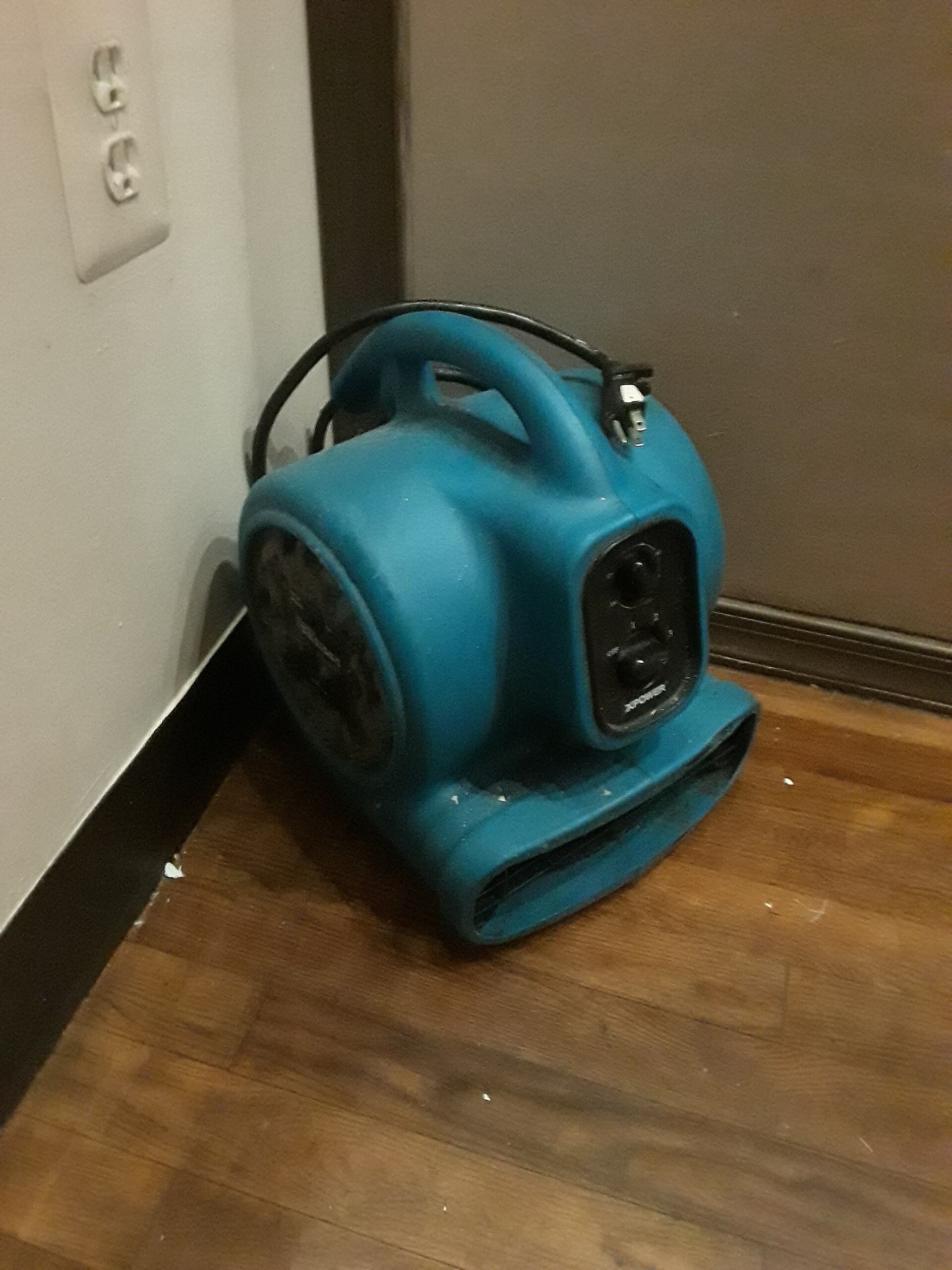
A blue XPOWER air mover angled into the base of a wall on a wood floor, plugged into a nearby outlet, with plaster dust on the boards.
An air mover set at the base of a wall. Angled along the surface, not pointed at it — the aim is to move the boundary layer, not to blow the room around.
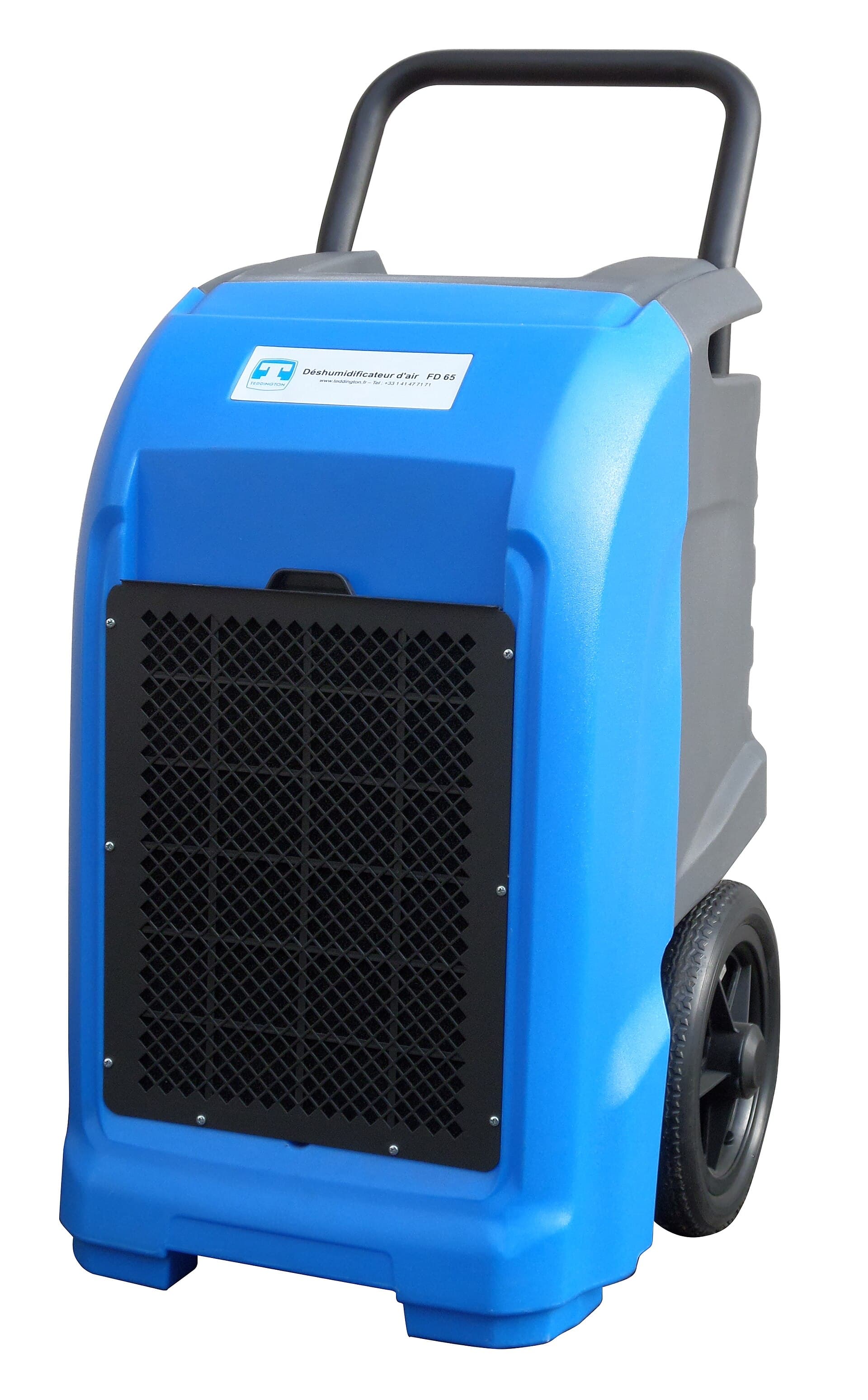
A professional site dehumidifier with a condensate pump attached, standing on a hard floor.
A refrigerant dehumidifier with a condensate pump. Air movers lift the water off the material; this is the machine that takes it out of the building.

Why the equipment runs for days

Concrete releases moisture at roughly one month per inch of thickness. We are not drying the slab to new-construction standard — we are getting the building back to its normal moisture content — but block, terrazzo and plaster hold water that surface readings do not see. Pull the equipment early and the flooring goes back down over a wet substrate.

Why we cut the drywall

A flood cut opens the wall above the water line so the cavity, the insulation and the base of the wall can dry, and so we can see what is behind it. It looks like damage and it is access. Left closed, the cavity stays wet and grows mould behind new paint.

Mould

It does not need a flood. It needs a surface that stayed wet.

The EPA’s guidance is to dry wet materials within 24 to 48 hours. Past that, you are no longer drying — you are remediating. Warm, humid conditions favour the fast end of that range, which is most of the year here.

The houses we find the worst growth in are usually the ones nobody was living in: a seasonal home in Palm Harbor with a slow supply leak, or a house closed up without power after a storm. Weeks of that does more than a foot of water does in a day.

Under Florida law the same company cannot both assess and remediate mould on one project. We remediate. If you need an independent assessment first, we will tell you so and you will hire that separately — that is the rule, not a preference.

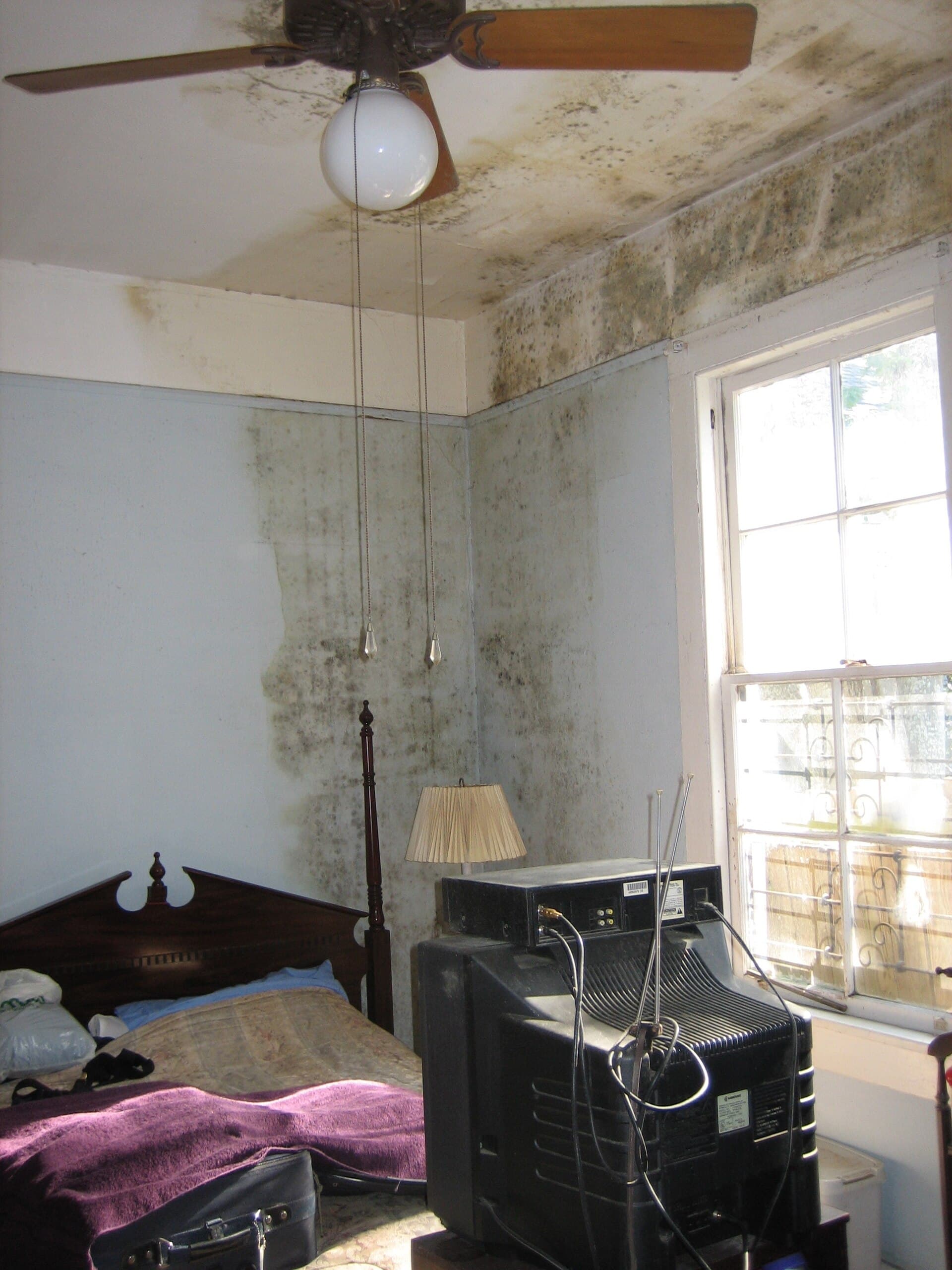
Heavy mould growth spreading across the wall of a bedroom in a storm-damaged house.
This house never flooded. Small roof leaks during the storm, then weeks shut up with no power — that is all it takes.
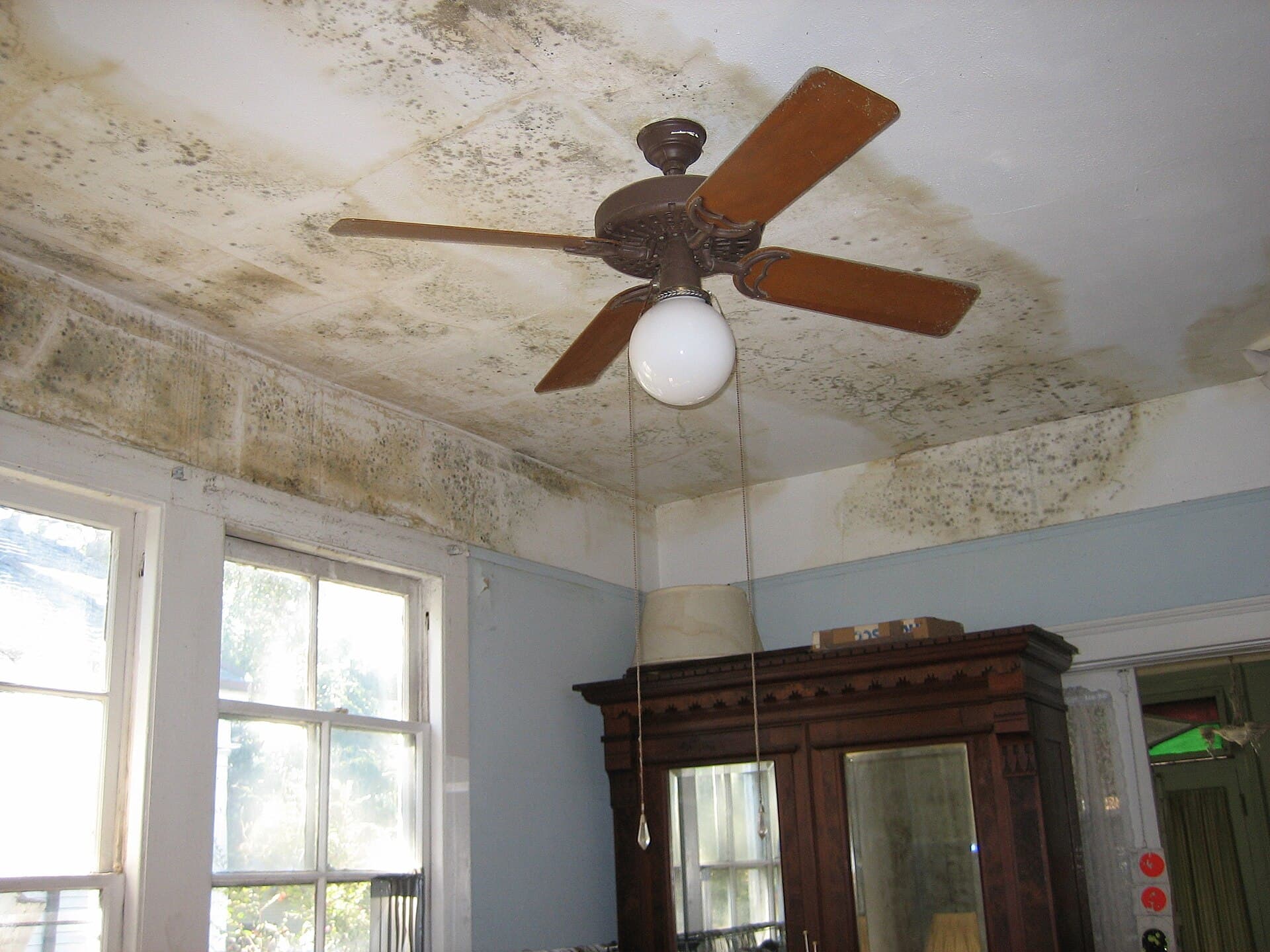
Mould spreading across a bedroom ceiling below a roof leak.
Mould on a ceiling under a minor roof leak. The stain is the small part; the growth follows the moisture into the cavity.

Wondering whether this goes on your insurance, and what it does to your premium? Read how a claim works.